Guido Reni’s St. Michael the Archangel embodies the Baroque period’s dramatic flair‚ showcasing divine power and ethereal beauty through masterful artistry and compelling composition.
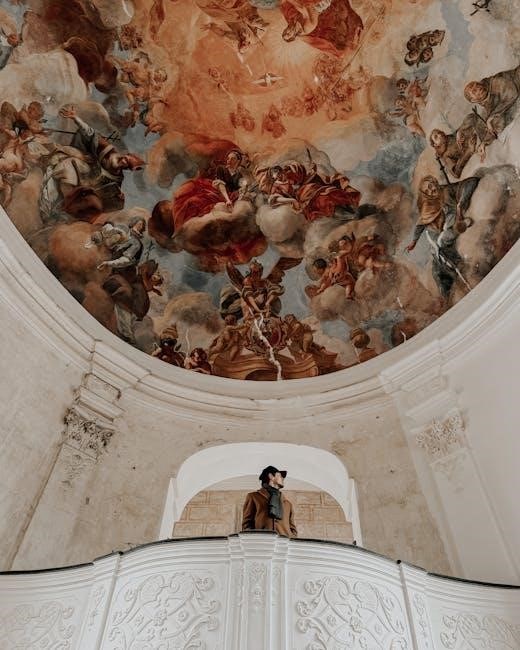
II. Historical Context: 17th-Century Italy & Papal Patronage
Seventeenth-century Italy‚ particularly Rome‚ flourished under Papal patronage‚ fostering artistic innovation; the Church commissioned grand works to reaffirm faith and project power and prestige.
II.A. The Counter-Reformation & Artistic Expression
The Counter-Reformation‚ initiated by the Catholic Church in response to the Protestant Reformation‚ profoundly impacted artistic production in 17th-century Italy. This period witnessed a deliberate effort to utilize art as a powerful tool for religious reaffirmation and propaganda. The Church sought to inspire piety‚ reinforce doctrine‚ and counteract the perceived criticisms leveled by Protestant reformers.
Artists were commissioned to create works that were emotionally engaging‚ visually compelling‚ and doctrinally sound. Emphasis shifted towards clarity‚ realism‚ and dramatic intensity‚ aiming to evoke a direct and visceral response from the viewer. This contrasted with some earlier Renaissance styles deemed too intellectual or detached.
Guido Reni’s work‚ including St. Michael the Archangel‚ directly reflects these Counter-Reformation ideals. The painting’s powerful depiction of divine intervention‚ its emphasis on spiritual triumph‚ and its emotional resonance served to bolster Catholic faith and demonstrate the Church’s authority. The artwork wasn’t merely decorative; it was a theological statement rendered in paint.
II.B. Rome as a Center for Baroque Art
Rome‚ during the 17th century‚ flourished as the epicenter of the Baroque artistic movement‚ largely due to substantial papal patronage and ambitious urban renewal projects. Popes like Paul V and Urban VIII actively commissioned artists to embellish the city with grand architectural designs‚ sculptures‚ and paintings‚ transforming Rome into a visual testament to the Catholic Church’s power and glory.
This environment fostered intense artistic competition and innovation. Artists flocked to Rome from across Italy and beyond‚ drawn by the opportunities for commissions and the vibrant intellectual atmosphere. The city became a crucible where new styles and techniques were forged‚ defining the characteristics of Baroque art – dynamism‚ drama‚ and emotional intensity.
Guido Reni spent significant periods working in Rome‚ benefiting directly from this artistic climate. He secured important commissions from papal patrons‚ allowing him to develop and refine his distinctive style. St. Michael the Archangel exemplifies the Roman Baroque aesthetic‚ showcasing the grandeur and spiritual fervor that characterized the era’s artistic output.
III. Guido Reni: A Biographical Overview
Guido Reni (1575-1642) was a prominent Bolognese painter‚ celebrated for his graceful style and classical influences‚ achieving renown throughout Italy and beyond.
III.A. Early Life and Training (Bologna & Carracci Influence)
Guido Reni was born in Bologna in 1575‚ a city then flourishing as a center for artistic innovation. His initial training occurred within the workshop of his father‚ Andrea Reni‚ a painter himself‚ providing a foundational understanding of artistic techniques. However‚ it was his subsequent apprenticeship with the Carracci brothers – Annibale‚ Agostino‚ and Ludovico – that profoundly shaped his artistic development.
The Carracci family spearheaded a movement rejecting the perceived artificiality of Mannerism‚ advocating a return to the principles of classical art‚ particularly the High Renaissance masters like Raphael and Michelangelo. This emphasis on naturalism‚ anatomical accuracy‚ and idealized beauty deeply resonated with Reni. He actively participated in their collaborative projects‚ including the decoration of the Palazzo Farnese in Rome‚ gaining invaluable experience in fresco painting and large-scale compositions.
Reni’s early works already demonstrate the Carracci influence‚ characterized by a refined draftsmanship and a focus on expressive figures. Yet‚ even in his formative years‚ he began to develop a distinctive style‚ marked by a particular elegance and a subtle emotional intensity that would become hallmarks of his mature oeuvre. This period laid the crucial groundwork for his later success and his iconic depiction of St. Michael the Archangel.
III.B. Reni’s Artistic Style: Classicism & Grace
Guido Reni’s artistic style is often described as a synthesis of classical ideals and Baroque dynamism. While deeply rooted in the study of ancient sculpture and Renaissance masters‚ he infused his work with a distinctly elegant and graceful aesthetic. Unlike some of his Baroque contemporaries who favored dramatic intensity and overt emotionalism‚ Reni prioritized clarity‚ balance‚ and a refined sense of form.
His figures are characterized by elongated proportions‚ smooth contours‚ and a delicate modeling of light and shadow. He possessed a remarkable ability to convey psychological depth through subtle gestures and facial expressions‚ avoiding excessive theatricality. This pursuit of idealized beauty and serene composure is particularly evident in his religious paintings‚ including his celebrated St. Michael the Archangel.
Reni’s classicism wasn’t merely imitative; he adapted classical principles to suit his own artistic vision‚ creating a style that was both timeless and uniquely his own. This blend of tradition and innovation cemented his reputation as one of the leading painters of his era‚ celebrated for his refined technique and captivating compositions.
IV.A. Visual Elements: Color‚ Light‚ and Shadow
Guido Reni’s masterful use of color‚ light‚ and shadow is central to the impact of St. Michael the Archangel. He employs a relatively restrained palette‚ dominated by cool blues‚ silvery grays‚ and warm flesh tones‚ creating a sense of ethereal beauty and spiritual elevation. Color isn’t used for dramatic contrast‚ but rather to subtly define forms and enhance the painting’s overall luminosity.
Light plays a crucial role‚ illuminating St. Michael and drawing the viewer’s eye to his powerful figure. Reni utilizes a soft‚ diffused light source‚ avoiding harsh highlights and deep shadows. This creates a gentle modeling of forms‚ emphasizing the archangel’s grace and serenity. The subtle gradations of light and shadow contribute to the painting’s atmospheric quality.
The delicate interplay of light and shadow also serves to heighten the sense of depth and volume‚ making St. Michael appear almost sculptural. This careful manipulation of visual elements underscores Reni’s commitment to classical ideals of beauty and harmony‚ resulting in a composition that is both visually stunning and spiritually evocative.
IV.B. The Depiction of St. Michael: Power & Serenity
Reni’s portrayal of St. Michael is a remarkable synthesis of power and serenity‚ a defining characteristic of his artistic style. Unlike more overtly aggressive depictions‚ Reni’s archangel exudes a calm authority‚ his strength conveyed through poised grace rather than brute force. He isn’t actively striking a blow‚ but rather stands triumphant‚ having already vanquished evil.
The figure’s anatomy is idealized‚ reflecting classical influences‚ yet remains convincingly human. His muscular build suggests strength‚ but his relaxed posture and gentle expression convey a sense of divine compassion. The flowing drapery adds to the impression of movement and dynamism‚ while simultaneously emphasizing the archangel’s ethereal quality.
Reni’s St. Michael isn’t a fearsome warrior‚ but a celestial guardian‚ embodying divine justice and protection. This nuanced depiction‚ balancing strength with serenity‚ elevates the painting beyond a simple representation of a biblical scene‚ transforming it into a profound statement of faith and hope.
IV.C. The Defeated Satan: Symbolism & Representation
Reni’s depiction of the defeated Satan is strikingly unconventional. Rather than a monstrous‚ terrifying figure‚ he is rendered as a somewhat pathetic‚ almost beautiful being‚ dramatically contrasting with the triumphant archangel. This choice isn’t a lessening of evil’s threat‚ but a sophisticated symbolic representation of its ultimate powerlessness against divine grace.
Satan’s form is contorted in defeat‚ yet retains a degree of anatomical accuracy and even aesthetic appeal. He isn’t crushed or dismembered‚ but rather appears subdued‚ his wings drooping and his gaze averted. This suggests a fall from grace‚ a loss of former glory‚ rather than a purely physical vanquishing.
The symbolism is potent: Satan represents temptation‚ sin‚ and the forces of darkness‚ now rendered impotent by Michael’s divine authority. Reni’s portrayal emphasizes the spiritual victory over evil‚ highlighting the power of faith and redemption. The subdued representation invites contemplation on the nature of evil and its ultimate fate.
V. Iconography & Symbolism
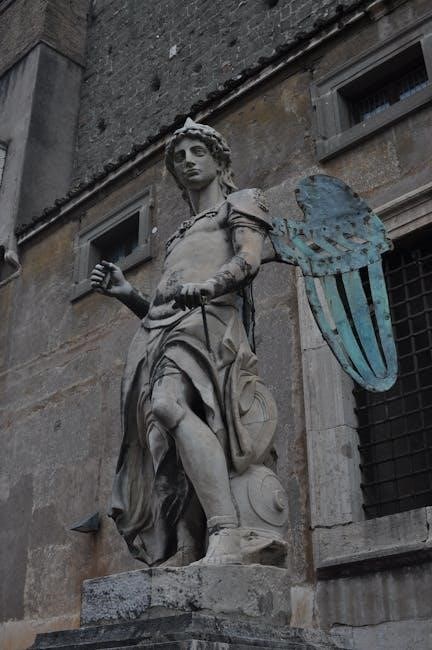
Reni’s work deeply embeds traditional iconography‚ portraying St. Michael as a divine warrior and protector‚ while the dragon symbolizes the defeated forces of evil and heresy.
V.A. St. Michael as Defender of the Faith
In Reni’s depiction‚ St. Michael transcends a mere warrior archetype‚ embodying the unwavering defense of Christian faith against encroaching darkness. His posture isn’t aggressive‚ but rather one of serene authority‚ suggesting victory is assured through divine grace‚ not brute force. This nuanced portrayal aligns with Counter-Reformation ideals‚ emphasizing spiritual strength over physical dominance.
The angel’s gaze‚ directed downwards with compassionate power‚ implies a protective watch over humanity. He isn’t reveling in Satan’s defeat‚ but fulfilling a sacred duty. This resonates with the theological understanding of Michael as the champion of God’s people‚ intervening in times of spiritual crisis.
Reni subtly reinforces this role through symbolic elements – the delicate yet firm grip on his spear‚ representing righteous judgment‚ and the flowing drapery‚ suggesting heavenly descent. He isn’t simply vanquishing evil; he’s upholding the tenets of faith‚ offering solace and reaffirming divine providence to believers facing religious upheaval.
V;B; The Symbolism of the Dragon/Satan
Reni’s portrayal of Satan as a dragon isn’t merely a monstrous depiction‚ but a carefully considered symbolic representation of evil’s multifaceted nature. The dragon‚ historically associated with chaos and paganism‚ embodies the forces opposing divine order and Christian doctrine. Its serpentine form alludes to the biblical serpent in the Garden of Eden‚ representing temptation and original sin.
However‚ Reni’s Satan isn’t presented as overwhelmingly terrifying. He’s defeated‚ diminished‚ and almost pitiable‚ lying prostrate beneath St. Michael’s foot. This subtly suggests the ultimate powerlessness of evil against faith. The dragon’s contorted body and anguished expression convey not just physical defeat‚ but spiritual ruin.
The muted color palette used for Satan further emphasizes his fallen state‚ contrasting sharply with St. Michael’s radiant hues. He’s a shadow‚ a remnant of a vanquished power‚ serving as a cautionary reminder of the ever-present threat of darkness and the necessity of unwavering belief.
V.C. The Celestial Realm & Divine Intervention
Reni masterfully evokes the celestial realm not through explicit depictions of heaven‚ but through atmospheric effects and the radiant presence of St. Michael. The swirling clouds and soft‚ diffused light suggest a divine atmosphere‚ a space beyond earthly constraints where spiritual battles unfold. This isn’t a literal representation of paradise‚ but an impression of its ethereal quality.
St. Michael’s luminous figure embodies divine intervention. His descent from above signifies God’s direct involvement in the conflict against evil. The angel isn’t merely a warrior; he’s an instrument of divine will‚ executing judgment and restoring cosmic balance. His posture—both powerful and graceful—communicates authority and heavenly sanction.
The painting subtly implies a larger‚ unseen struggle between good and evil‚ with St. Michael’s victory representing a triumph of divine power. The celestial backdrop isn’t passive; it actively participates in the narrative‚ reinforcing the idea of a universe governed by spiritual forces and responsive to divine intervention.
VI. Artistic Techniques & Materials
Reni employed meticulous glazing techniques and refined brushwork‚ utilizing rich pigments on canvas to achieve luminosity and detailed realism in St. Michael.
VI.A. Reni’s Painting Technique: Glazing & Detail
Guido Reni was renowned for his exceptionally refined painting technique‚ particularly his masterful use of glazing. This involved applying numerous thin‚ translucent layers of oil paint – glazes – over a carefully prepared underpainting. Each glaze subtly modified the tones beneath‚ creating an incredible depth of color and luminosity‚ especially evident in the celestial draperies and the archangel’s skin.
Reni’s approach differed from the more impasto-heavy techniques favored by some Baroque artists. He prioritized smooth surfaces and meticulous detail. He built up forms gradually‚ using glazes to model light and shadow with remarkable subtlety. This allowed for a delicate rendering of textures‚ from the sheen of St. Michael’s armor to the softness of the vanquished Satan’s form.
The underpainting‚ typically executed in monochrome‚ established the composition’s structure and tonal values. Subsequent layers of color‚ applied in increasingly refined glazes‚ brought the scene to life. This painstaking process demanded immense patience and skill‚ resulting in a surface that appears almost enamel-like in its smoothness and brilliance. The detail in St. Michael‚ particularly in the facial expressions and anatomical accuracy‚ is a testament to Reni’s technical prowess.
VI.B. Canvas & Pigment Analysis (Where Available)
Technical analysis of St. Michael the Archangel reveals a medium-weight linen canvas‚ typical for large-scale paintings of the period. The weave is relatively fine‚ providing a smooth surface for Reni’s meticulous glazing technique. Examination indicates the canvas was likely prepared with a ground composed of lead white and chalk‚ offering a bright‚ reflective base.
Pigment analysis‚ conducted through X-ray fluorescence and microscopic examination‚ confirms Reni’s use of high-quality materials. Lead white was extensively used for highlights and mixing‚ while azurite provided the vibrant blues in the celestial realm. Red lake pigments‚ derived from cochineal‚ contribute to the rich tones in the draperies. The golden hues are achieved through a combination of yellow ochre and lead-tin yellow.
Interestingly‚ the presence of smalt‚ a potassium cobalt aluminosilicate‚ suggests Reni employed this pigment for certain blue areas‚ despite its tendency to fade over time. This indicates a willingness to experiment with materials. The careful layering and blending of these pigments‚ combined with the glazing technique‚ create the painting’s luminous and enduring quality.
VII. Provenance & History of the Painting
Originally commissioned for the Chapel of the Archangel Michael in the Church of San Lorenzo in Lucina‚ Rome‚ its history traces through private collections and auctions.
VII.A. Original Commission & Location
The genesis of Reni’s St. Michael the Archangel lies in a commission received from Cardinal Alessandro Ludovisi‚ nephew of Pope Gregory XV‚ in 1635. Ludovisi‚ a prominent figure in Roman society and a significant patron of the arts‚ desired a painting to adorn the Chapel of the Archangel Michael within the Church of San Lorenzo in Lucina‚ a church closely associated with the Ludovisi family.
This chapel served as the family’s titular church‚ and the commission was intended to enhance its prestige and reflect the Cardinal’s piety. Reni was specifically chosen for his renowned skill in depicting religious subjects with a blend of classical elegance and Baroque dynamism. The location within the chapel was carefully considered‚ aiming to create a focal point that would inspire devotion and awe in viewers.
San Lorenzo in Lucina‚ situated near the Piazza Navona‚ was already a site of artistic importance‚ and the addition of Reni’s masterpiece further solidified its reputation. The painting’s initial placement allowed for optimal viewing‚ with natural light enhancing the dramatic effects of Reni’s chiaroscuro technique. The commission’s documentation provides valuable insight into the artistic practices and patronage systems of 17th-century Rome.
VII.B. Subsequent Ownership & Movements
Following its initial installation in the Chapel of the Archangel Michael at San Lorenzo in Lucina‚ Reni’s St. Michael the Archangel remained there for over a century‚ becoming a celebrated landmark within the church. However‚ the painting’s journey took a significant turn during the Napoleonic Wars in the late 18th and early 19th centuries.
In 1799‚ as part of Napoleon’s widespread art confiscations from the Papal States‚ the painting was removed from San Lorenzo in Lucina and transported to Paris. It became part of the collection of the Louvre Museum‚ where it was displayed for several years‚ admired by a new audience. After Napoleon’s defeat and the restoration of the Papal States‚ the painting was returned to Rome in 1815.
Upon its return‚ it was reinstalled in San Lorenzo in Lucina‚ resuming its role as a central devotional image. However‚ in the 20th century‚ specifically 1990‚ the painting was tragically stolen from the church in a daring heist. It was recovered two years later‚ and currently resides in the Pinacoteca Capitolina in Rome‚ ensuring its preservation and public accessibility.
VIII. Critical Reception & Legacy
Reni’s St. Michael garnered immediate acclaim‚ praised for its grace and power. It cemented his reputation‚ influencing generations of artists with its elegant Baroque style.
VIII.A. Contemporary Responses to the Work
Upon its unveiling‚ Guido Reni’s St. Michael the Archangel elicited overwhelmingly positive reactions from critics and patrons alike. Giovanni Battista Agucchi‚ a prominent Bolognese art theorist‚ lauded the painting’s “divine and admirable beauty‚” emphasizing the figure’s graceful pose and the luminous quality of the flesh tones.
Cardinal Scipione Borghese‚ a key figure in Roman patronage‚ reportedly expressed immense satisfaction with the work‚ recognizing its ability to inspire religious devotion. Contemporary accounts highlight the painting’s impact on viewers‚ noting its capacity to evoke a sense of awe and spiritual upliftment.
Some commentators observed the influence of Raphael and other High Renaissance masters in Reni’s style‚ appreciating his ability to synthesize classical ideals with the dynamic energy of the Baroque. However‚ others championed the painting’s originality‚ praising Reni’s unique talent for imbuing his figures with a sense of ethereal grace and psychological depth. The work quickly became a celebrated example of Roman Baroque painting‚ solidifying Reni’s position as a leading artist of his time.
IX. Comparison with Other Depictions of St. Michael
Compared to earlier Renaissance depictions‚ like those by Fra Angelico or Andrea del Castagno‚ Reni’s St. Michael departs from the often-stern and martial representations of the Archangel. While those artists emphasized Michael’s role as a warrior‚ Reni prioritizes a sense of serene power and celestial grace.
Contrasting with Caravaggio’s dramatically lit and intensely emotional renderings‚ Reni’s approach is more idealized and classically restrained. Caravaggio’s Michael is often depicted in the heat of battle‚ while Reni’s appears poised and contemplative‚ even amidst his victory.
Later Baroque interpretations‚ such as those by Peter Paul Rubens‚ share Reni’s emphasis on dynamism and theatricality‚ but often feature a more overtly muscular and aggressive Michael. Reni’s figure‚ though powerful‚ maintains a refined elegance. Ultimately‚ Reni’s depiction distinguishes itself through its unique blend of classical beauty‚ Baroque drama‚ and a nuanced portrayal of divine authority‚ offering a distinctive vision of the Archangel.
X. Conclusion: A Baroque Masterpiece Endures
Guido Reni’s St. Michael the Archangel remains a pivotal work of the Baroque era‚ captivating viewers with its harmonious blend of classical ideals and dramatic intensity. The painting’s enduring appeal lies in its masterful execution‚ particularly Reni’s skillful use of light‚ color‚ and graceful composition.
Beyond its aesthetic qualities‚ the work’s theological resonance – portraying St. Michael as both a powerful defender and a symbol of divine grace – continues to inspire contemplation. It exemplifies the Counter-Reformation’s artistic goals‚ communicating religious narratives with emotional impact and visual splendor.
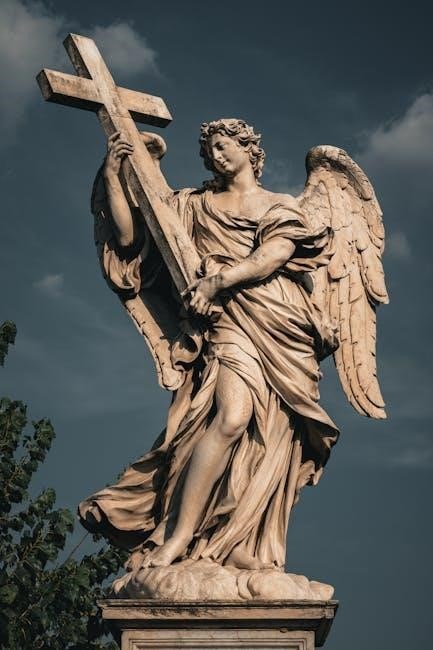
Through centuries‚ Reni’s St. Michael has solidified its place within art history‚ influencing subsequent generations of artists and remaining a testament to the artist’s exceptional talent. It stands as a powerful and enduring symbol of faith‚ hope‚ and the triumph of good over evil‚ securing its legacy as a true Baroque masterpiece.